T-money Card for First-Time Visitors: Buy, Top Up, Tap In/Out
- 퀴즈모아 1 days ago 2026.09.26 18:27
-
 0
0
If you only buy one thing after landing in Korea, make it a T-money card. It is the prepaid transit card used on Seoul’s subway and buses, many taxis, and (with cash) easy top-ups at convenience stores.
Single tickets work, but T-money is cheaper per ride and is what unlocks transfer discounts between subway and bus.
This guide is for first-time foreign visitors: where to buy it, how to load KRW, how to tap correctly, and what not to mix up at Incheon Airport.
1. Buy a physical T-money before you leave the airport
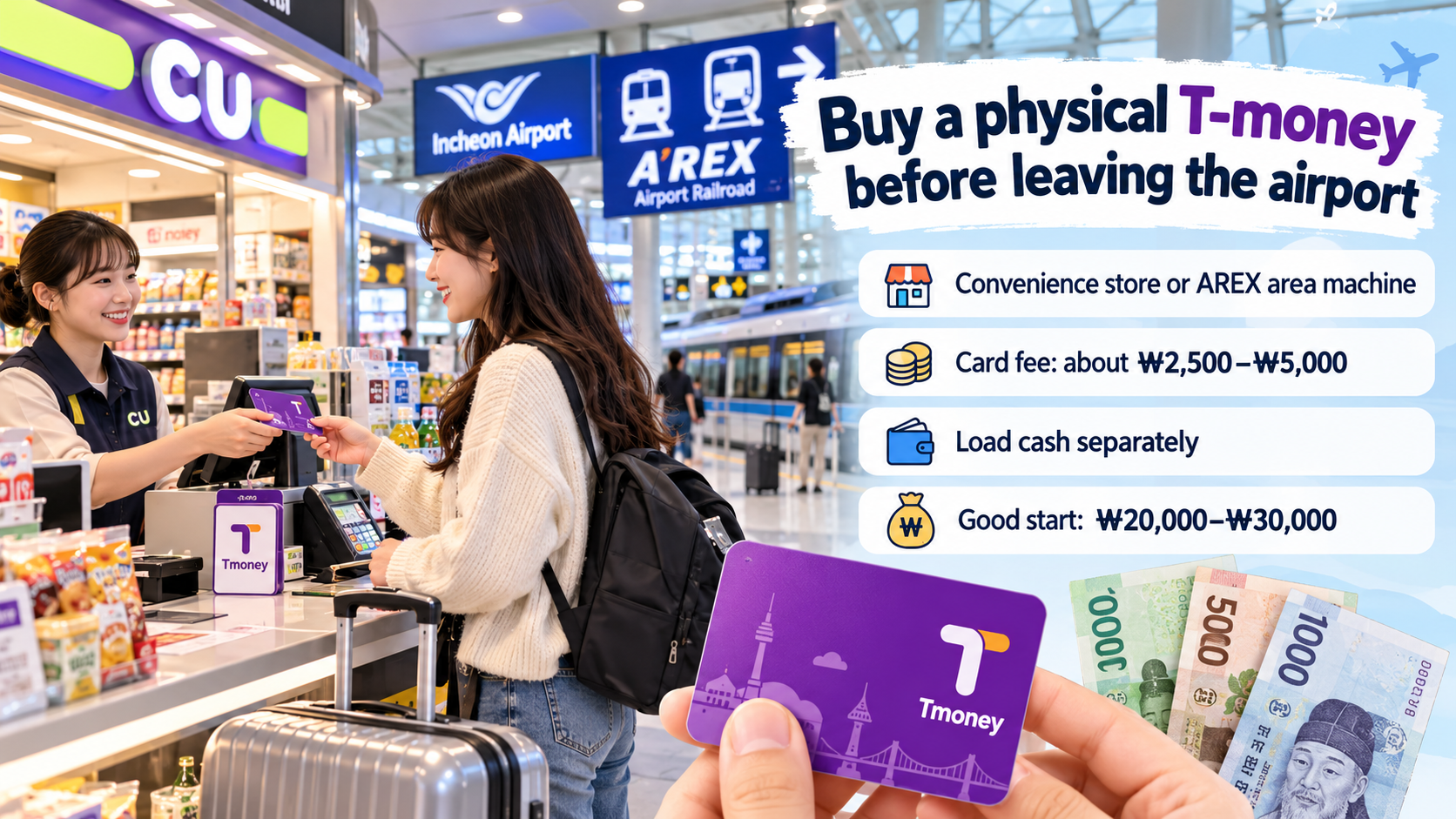
After immigration and baggage claim, look for a convenience store (CU, GS25, 7-Eleven, emart24) or a T-money / transit machine near the Airport Railroad (AREX) area.
- Card itself: usually about ₩2,500–₩5,000 depending on design.
- Stored value: separate — you load cash credit on top of the card fee.
- Payment tip: plan on Korean won cash for buying and topping up. Foreign-issued cards are often refused at counters and many machines.
Carry small notes (₩1,000 / ₩5,000 / ₩10,000). Some airport machines take bills only and reject coins or large denominations. How much to load on day one? For a Seoul stay, ₩20,000–₩30,000 is a safe start — you can top up anytime later at the same stores.
If you want terminal maps and airport rail directions in English before you leave arrivals, open the Incheon Airport transport page, then buy T-money at the convenience store on the way to the gates.
After you buy the blank card, load cash at the counter or a station charger, then check the balance on the machine screen before you head to AREX or the subway.
2. Top up at a convenience store or station machine
Hand the card to the clerk and say the amount, or follow the English menu on a station charger:
- Place the card on the reader pad.
- Choose Charge / Recharge.
- Select the amount → insert cash → confirm balance on screen.
Keep a small cash stash for top-ups even if you pay hotels and restaurants by card. Transit and convenience-store top-ups still lean on cash for visitors.
3. How to tap (and the mistake that costs you money)
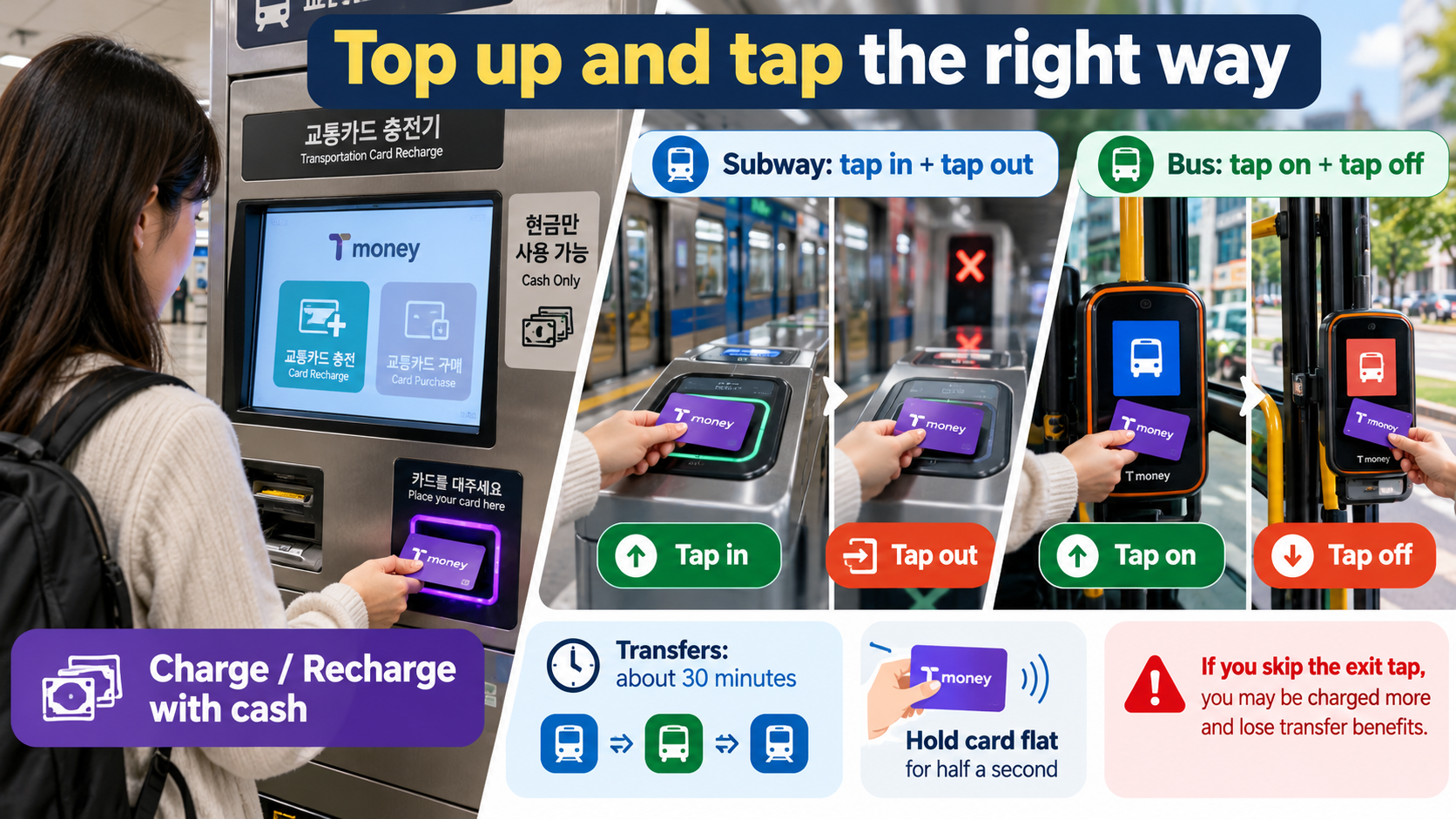
Subway: tap at the gate when you enter and again when you exit. Fares are calculated by distance.
Bus: tap when you board and tap again when you get off (reader near the rear or middle door on many Seoul buses). If you skip the exit tap, you can be charged a higher fare and lose transfer benefits.
Transfers: within about 30 minutes, switching between subway ↔ bus (or bus ↔ bus) usually does not charge a full new base fare — T-money handles it automatically if you tapped correctly.
Hold the card flat on the reader for half a second. Waving it too fast is a common “card not read” moment at busy gates.
4. Incheon Airport → Seoul: do not confuse AREX Express with All-Stop
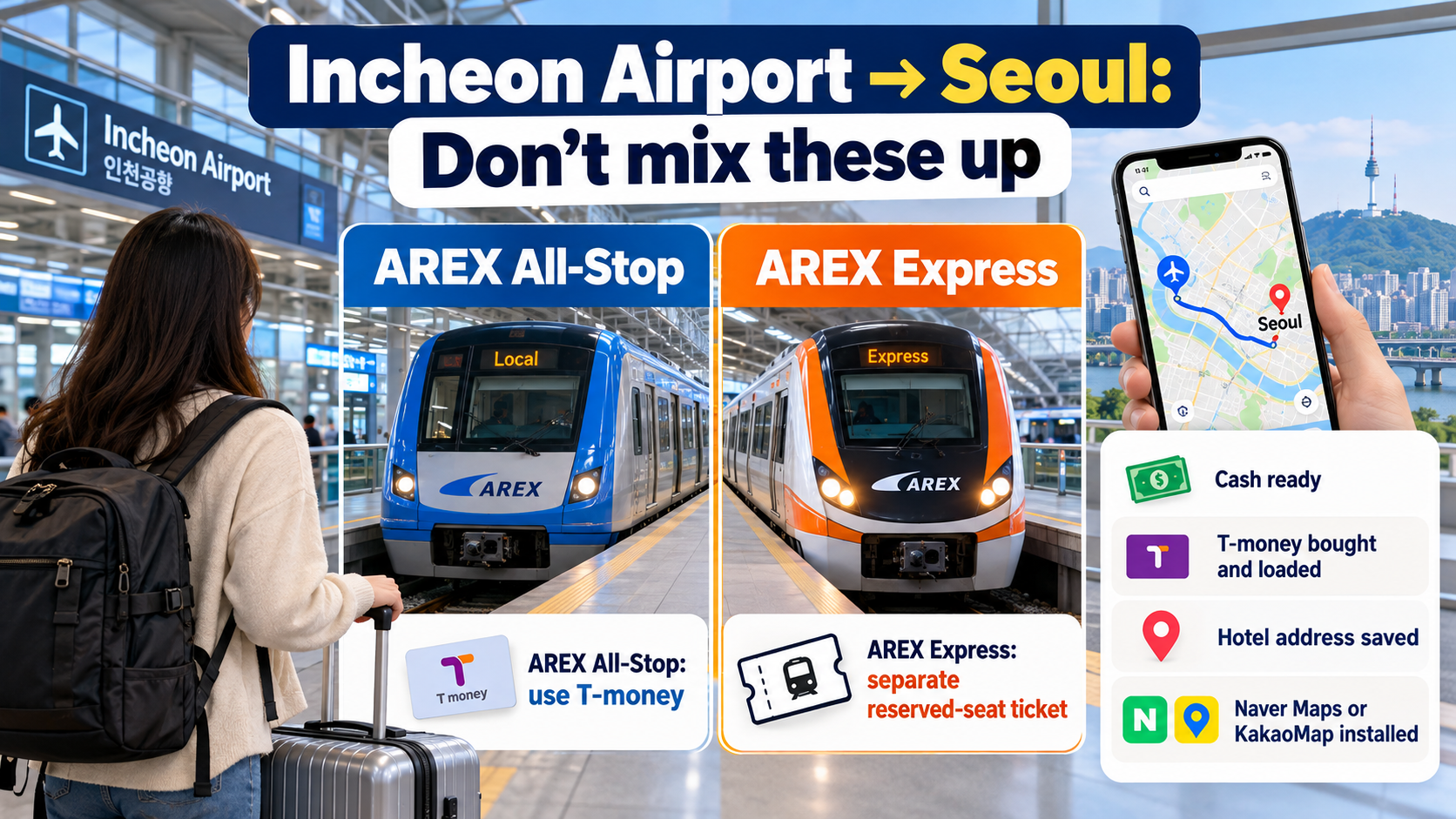
Both trains leave from the airport, but tickets are different:
- AREX All-Stop: stops at stations like Geomam, Hongik Univ., Seoul Station. You can generally use T-money at the gate for this service.
- AREX Express: reserved seat, fewer stops, separate ticket. T-money alone will not open Express gates. Buy Express at the dedicated counter/machine or online before you line up.
With luggage and a first Seoul hotel near Hongdae or Seoul Station, All-Stop is often enough. If you want the reserved Express seat, buy that ticket on the official AREX English site — do not try to enter Express gates with T-money only.
Limousine buses are slower in traffic but drop you closer to some hotel zones — useful late at night when you do not want a transfer with heavy bags.
5. Apps that actually help (Naver Maps beats Google here)
For walking directions, subway exits, and bus numbers inside Korea, install Naver Maps or KakaoMap before you rely on Google Maps. English UI is available; save your hotel address in Korean characters if you can (copy from booking confirmation).
Offline tip: download the Seoul map area on your arrival Wi‑Fi or eSIM so you are not stuck without signal in the basement transfer corridors.
6. Quick checklist before you leave the arrivals hall
- ₩30,000–₩50,000 cash for T-money + small purchases
- Physical T-money bought and loaded
- Hotel address in Korean saved in your phone
- Route decided: AREX All-Stop / Express / airport bus
- Naver Maps or KakaoMap installed
Once that card is in your wallet, the rest of Seoul transit feels straightforward: tap in, ride, tap out, and top up when the balance runs low. That one habit saves time every day of the trip.
