Korean Phone Number for Foreigners, How to Get One for Identity Verification
If you plan to live in Korea, a local number is useful for much more than calls and texts. The important difference is whether your Korean phone number can also be used for mobile identity verification.
A number that receives SMS does not automatically guarantee identity verification. If you need Korean online services, make sure the mobile line is registered to you and ask whether the specific plan supports identity verification.
How to Get a Korean Phone Number as a Foreigner
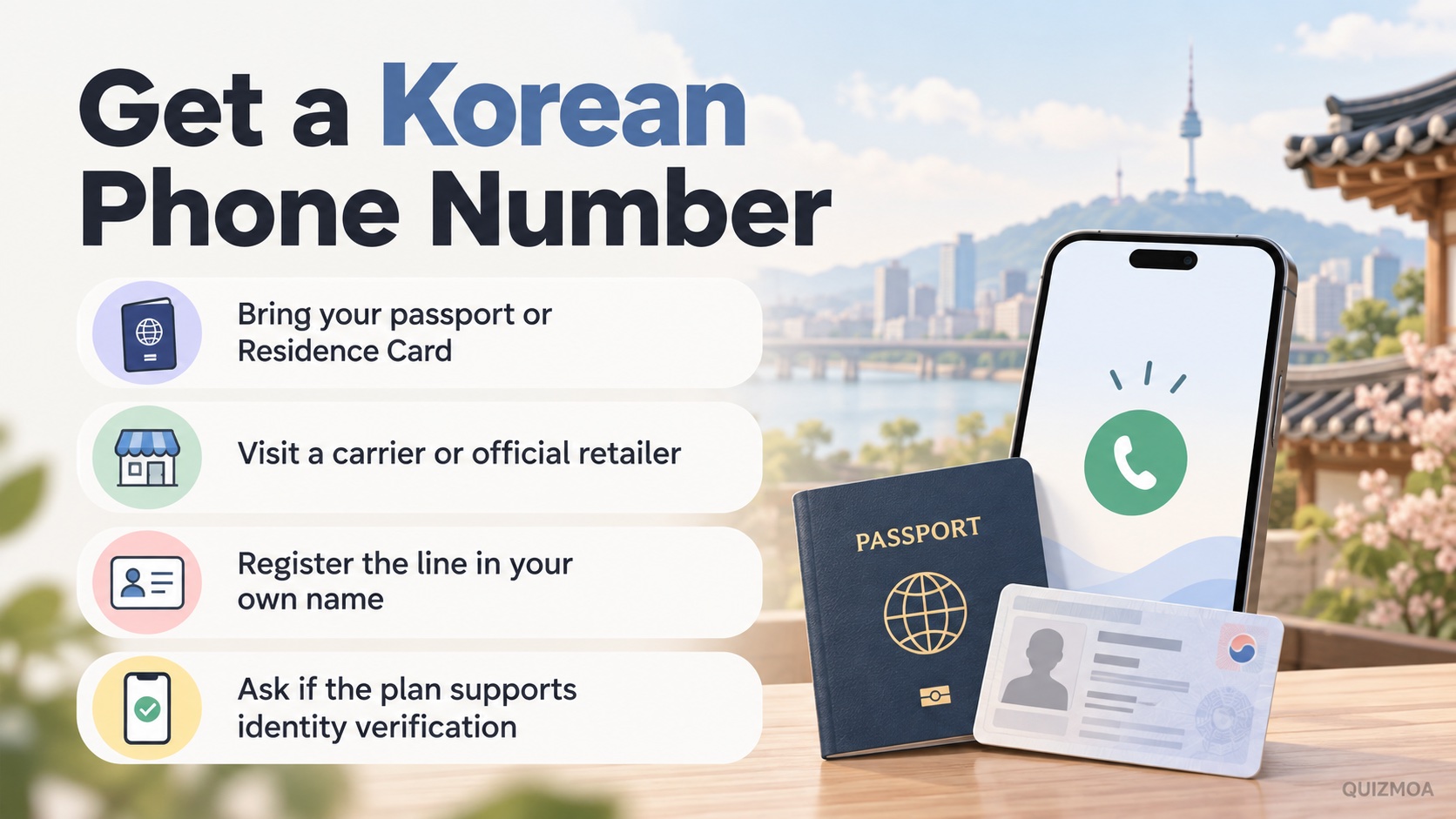
Foreign residents can sign up through major carriers such as KT, SK Telecom, and LG U+. Seoul’s official guidance says foreigners should visit a carrier store and present a passport or foreign registration card.
KT gives more specific requirements. Foreign nationals normally use their registration document for mobile service, while a prepaid line can also be opened with a standard passport. A prepaid line activated with a passport is available for 90 days from activation.
① Prepare your passport or Residence Card
② Visit a carrier or official retailer
③ Register the mobile line in your own name
④ Confirm that the plan supports mobile identity verification
Check KT Requirements for Foreign Customers
KT also states that at least 90 days must remain on your visa when subscribing to its mobile services. Requirements can differ by carrier and plan, so check the conditions before signing a contract or paying for a SIM.
Does a Prepaid or MVNO Plan Support Identity Verification?
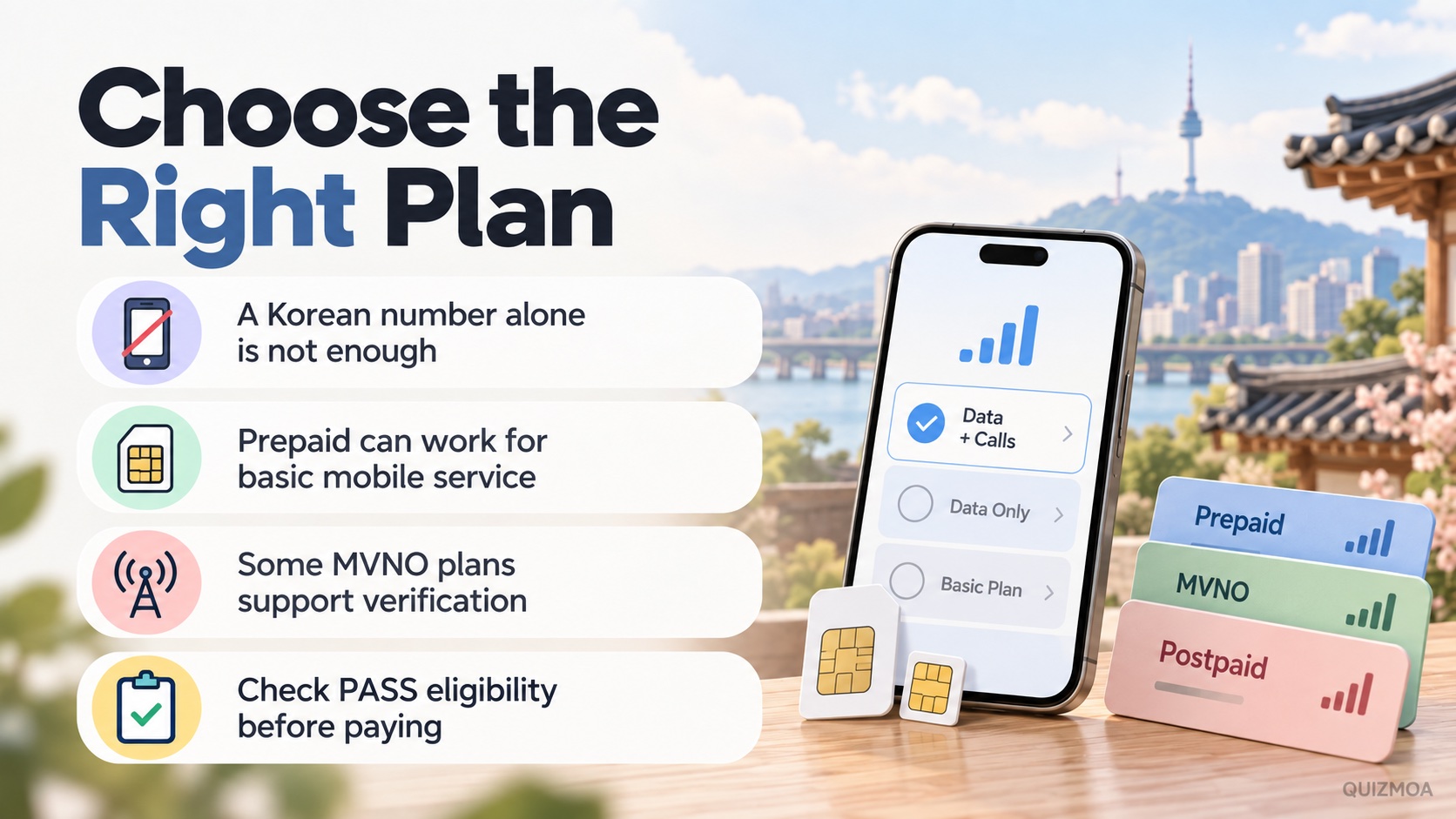
Do not choose a plan only because it includes a Korean phone number. A passport-based prepaid plan may provide local mobile service, but that does not by itself prove that every Korean identity-verification service will accept the line.
PASS says foreign residents can use its certificate service if they can complete mobile-phone identity verification and register for the authentication app. Its FAQ also includes support for customers using MVNO services on the major Korean mobile networks.
If identity verification matters for the services you plan to use, ask the carrier one specific question before paying: “Does this plan support mobile identity verification for a foreign resident?” That is more useful than asking only whether the SIM has a Korean number.
What to Check When Phone Verification Fails
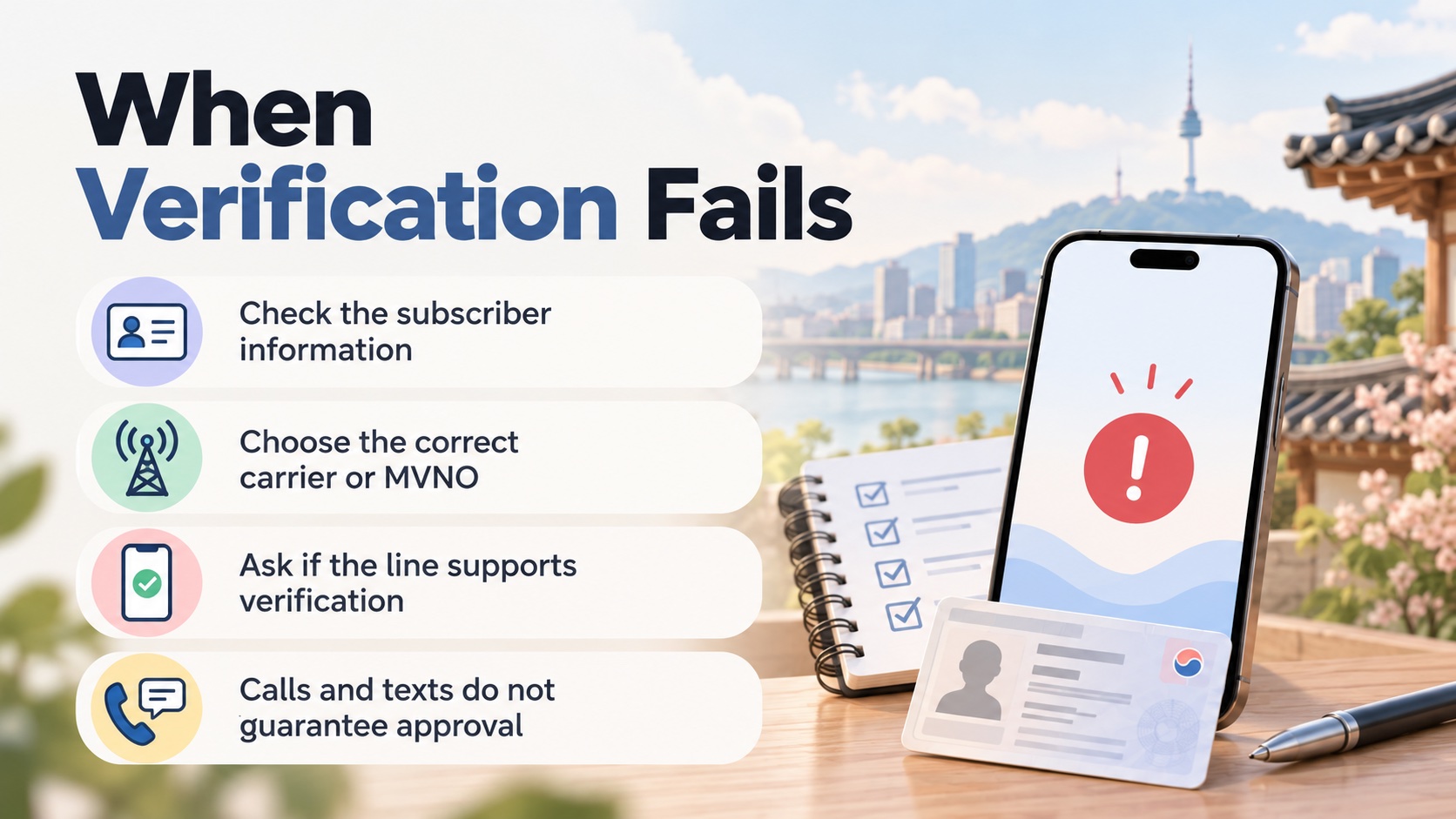
First, check whether the personal information entered on the verification screen matches the information registered with your carrier. Korean mobile verification uses subscriber information, so the carrier record is the first place to check when verification fails.
Next, make sure you selected the correct carrier. If you use an MVNO, choose the MVNO option rather than selecting the underlying major network as if you were its direct customer.
If calls and SMS work but identity verification still fails, contact your carrier and ask whether your exact line is eligible for mobile identity verification. This separates a basic working phone number from the verification capability needed by many Korean online services.

- PreviousHow to Separate Trash in Korea, What Goes in Each Bag and Bin2026.10.02