How to Separate Trash in Korea, What Goes in Each Bag and Bin
Moving into a home in Korea means learning a trash system that may be very different from the one you are used to. General waste, food waste, and recyclables are handled separately, and using the wrong bag or collection area can create problems.
The easiest way to start is to sort everything before you throw it away. Your building and local district may have different collection days or equipment, so learn the basic categories first and then check the rules where you actually live.
General Waste Uses Official Garbage Bags
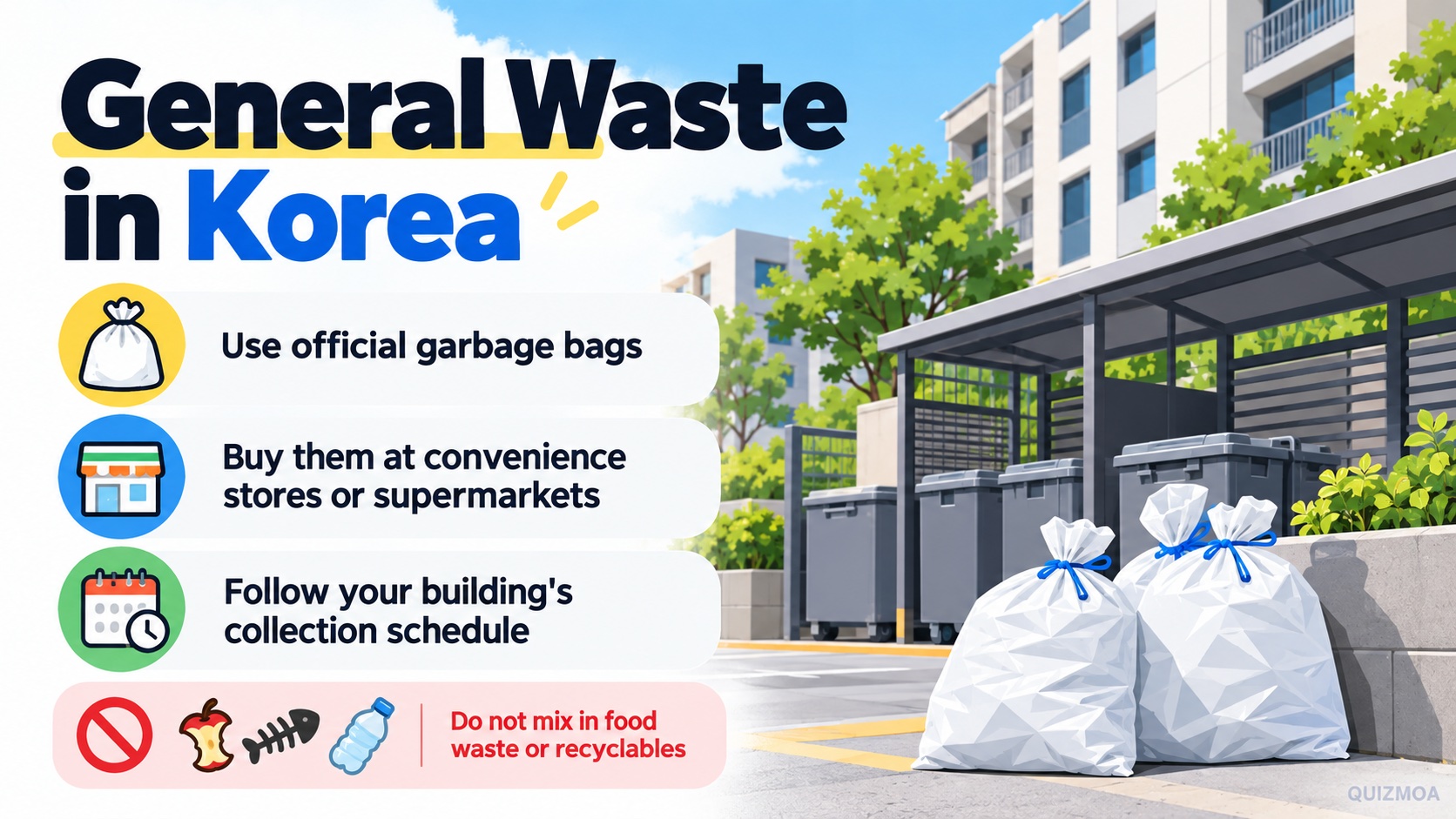
General household waste should not normally go into an ordinary shopping bag. In Seoul, residents use official standard garbage bags, which can be purchased at supermarkets and convenience stores. Prices and collection schedules can differ by district.
General waste includes household items that are not recyclable or accepted as food waste. Seoul’s official guidance lists animal bones, shellfish shells, onion and garlic skins, hard fruit pits, eggshells, and disposable tea bags among items that should stay out of food-waste collection.
① Separate general waste, food waste, and recyclables
② Buy the official garbage bag used in your area
③ Place only non-recyclable general waste inside
④ Follow your building or district collection schedule
Open the 2026 Living in Seoul Guide
If you live in an apartment or officetel, there may be a designated waste room instead of curbside collection. Smaller residential buildings may use an outdoor collection point, so check the notice board or ask the building manager before leaving bags outside.
Not Every Kitchen Scrap Is Food Waste
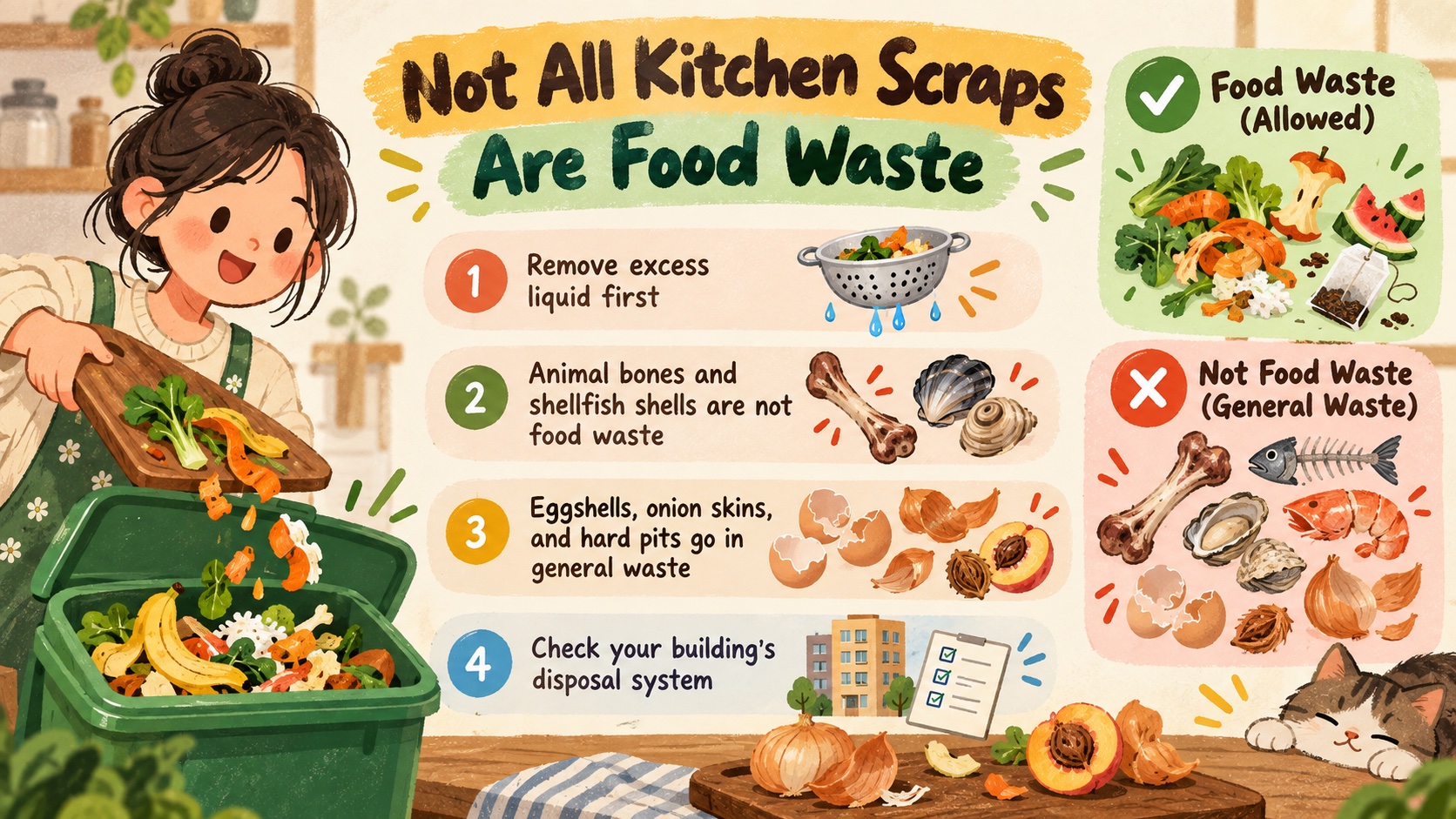
Food waste is one of the easiest categories to get wrong. Something can come from food and still belong in general waste because Korean food-waste processing cannot accept every shell, bone, skin, or hard seed.
Seoul specifically excludes items such as walnut and coconut shells, peach and persimmon pits, animal and fish bones, shellfish shells, eggshells, onion and garlic skins, and tea grounds. Actual food waste should have excess moisture and foreign material removed before disposal.
Check Seoul’s Official Food Waste Guide
How you pay for food-waste disposal also depends on where you live. Some buildings use dedicated containers or collection bags, while larger apartment complexes may use a food-waste machine. Check the system in your building before buying bags on your own.
Separate Recycling by Material and Check Local Collection Rules
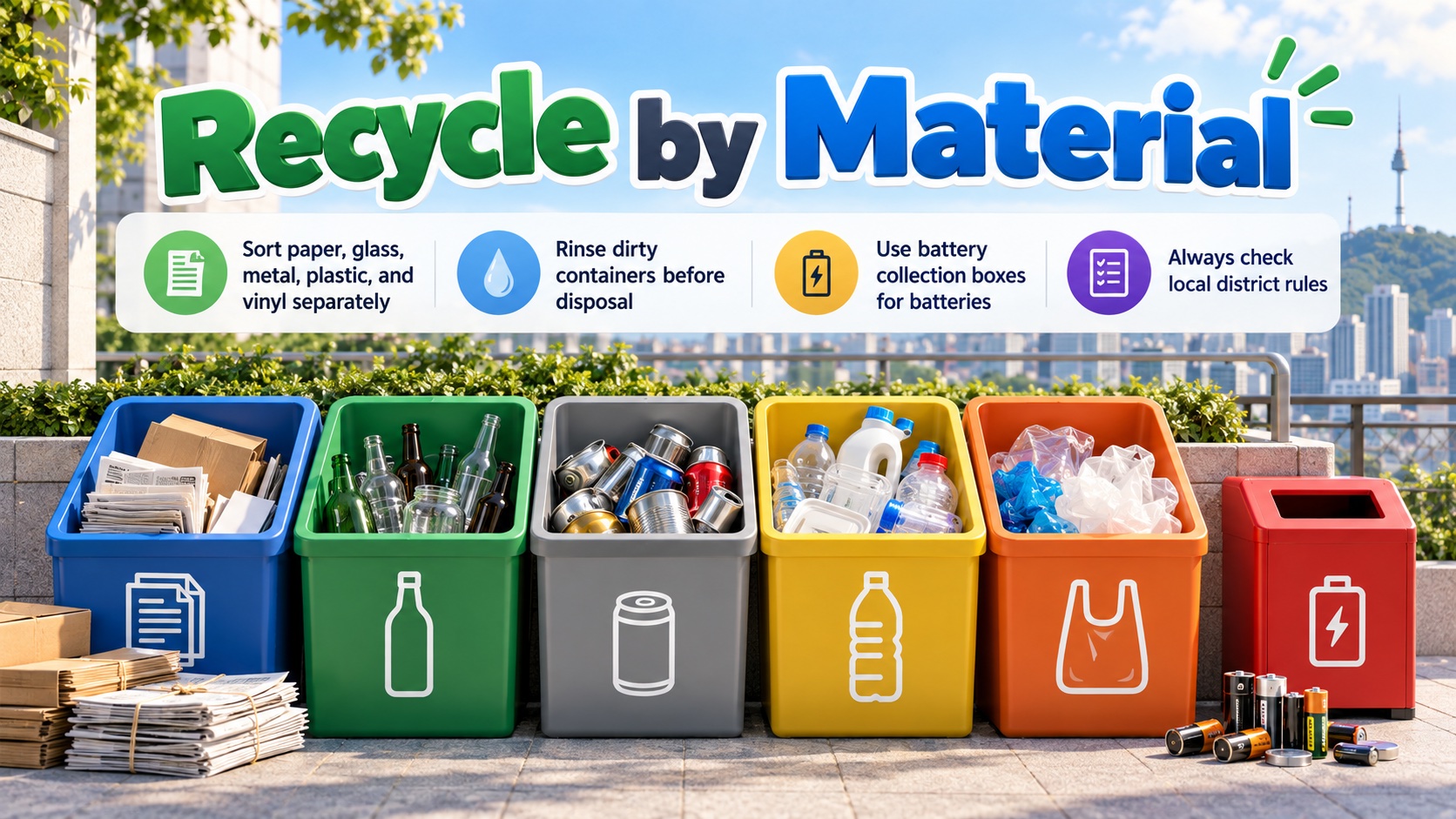
Recyclables should be kept separate from general waste. Seoul’s guide lists categories including paper, glass, metal, plastic, vinyl, Styrofoam, milk cartons, and fluorescent lamps, although the collection setup can look different from one building to another.
Cleanliness matters too. Dirty packaging may not belong with recyclable material, so empty containers and remove food residue before disposal. Batteries should be placed in designated battery collection boxes rather than mixed with normal household waste.
The exact disposal day, location, bag type, and food-waste method are local rules rather than something you should copy from another neighborhood. Seoul’s updated guidance specifically tells residents to check their district office for detailed food-waste standards.
If you have just moved into a new apartment, villa, dorm, or officetel, check the building’s disposal area before your first trash day. Once you know where general waste, food waste, and recycling belong in your building, the everyday routine becomes much easier to follow.
