How to See a Doctor in Korea as a Foreigner, What to Bring and Where to Start
Getting sick in Korea can feel confusing when you do not know which clinic to choose or what to take with you. For most non-emergency care, the practical starting point is a local clinic, hospital, or general hospital rather than going straight to a tertiary hospital.
If you use Korean National Health Insurance, bring an accepted form of identification. A passport or Residence Card can be used for the mandatory identity check required for covered medical services.
Start With a Local Clinic or Hospital
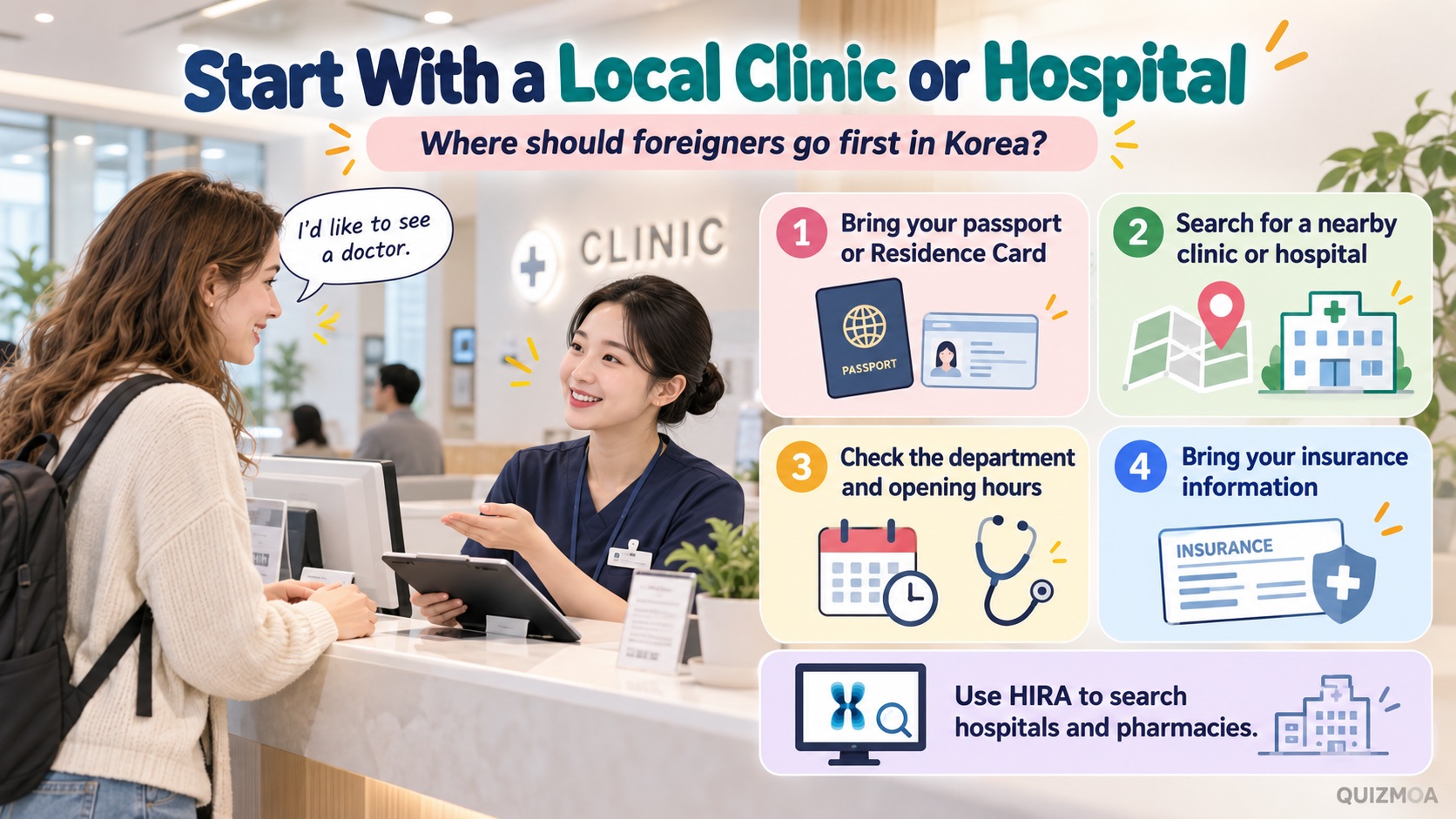
Korea’s National Health Insurance system separates medical care into two stages. Clinics, hospitals, and general hospitals are part of the first stage, while tertiary hospitals belong to the second stage.
You can use HIRA’s official health map to search for hospitals and pharmacies by location, medical facility type, and other conditions. It can also show facilities that are currently open.
① Prepare your passport or Residence Card
② Search for a nearby medical facility
③ Confirm the department and opening hours
④ Bring your ID and insurance information to the visit
Find a Hospital or Pharmacy on HIRA
Opening hours and appointment policies can vary by facility, so check before traveling across town. If you are enrolled in National Health Insurance, the clinic or hospital will also verify your identity before applying insurance coverage.
Bring ID and Know When a Referral Is Required
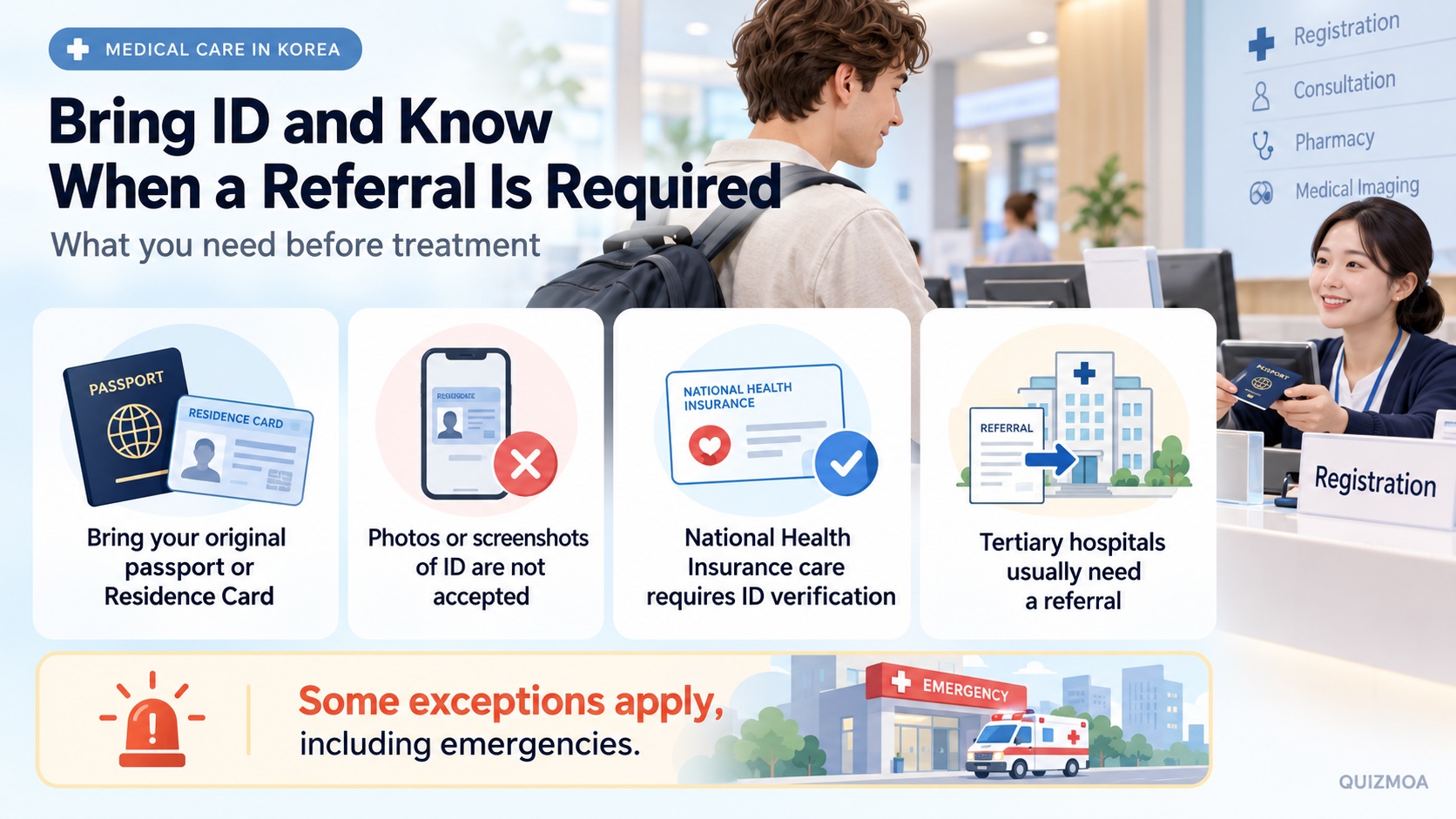
Since May 2024, people receiving services covered by National Health Insurance must present acceptable identification at hospitals and clinics. Official guidance lists passports and Residence Cards among the accepted documents.
A photo or captured image of an ID is not accepted as a substitute. Bringing the original document or an accepted electronic identification method avoids problems during registration.
Check the Official Hospital ID Rules
If you need treatment at a tertiary hospital under National Health Insurance, the general rule is that you first receive first-stage care and then present a referral issued by the doctor who treated you. Specific exceptions apply, including certain emergency and other legally defined cases.
Find an Open Clinic or Pharmacy When You Need One
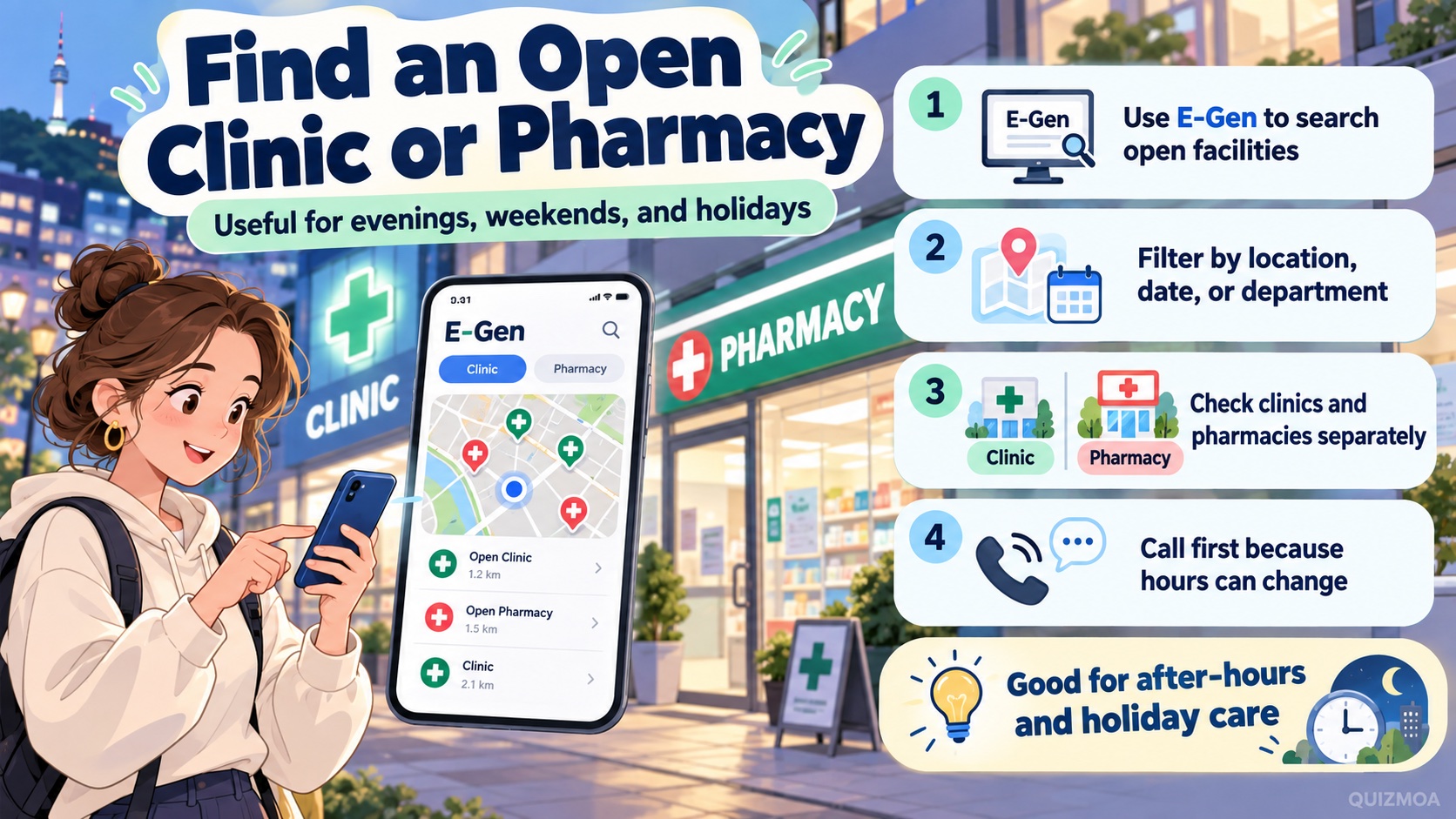
If you need care outside normal hours, the official E-Gen service lets you search for hospitals, clinics, and pharmacies that are listed as open. You can filter by medical facility, department, date, and location.
E-Gen also warns that operating hours can change, so call the facility before traveling whenever possible. This is especially useful on evenings, weekends, and public holidays when nearby clinics may follow different schedules.
Find an Open Clinic or Pharmacy
If a doctor gives you a prescription, take it to a pharmacy to have the medicine dispensed. Before leaving the medical facility, make sure you understand whether you need a follow-up visit, another test, or a referral to a larger hospital.
For routine care, knowing the facility level, bringing the correct ID, and checking opening hours covers most of the practical work. For urgent or life-threatening symptoms, use emergency medical services rather than relying on a routine clinic search.
